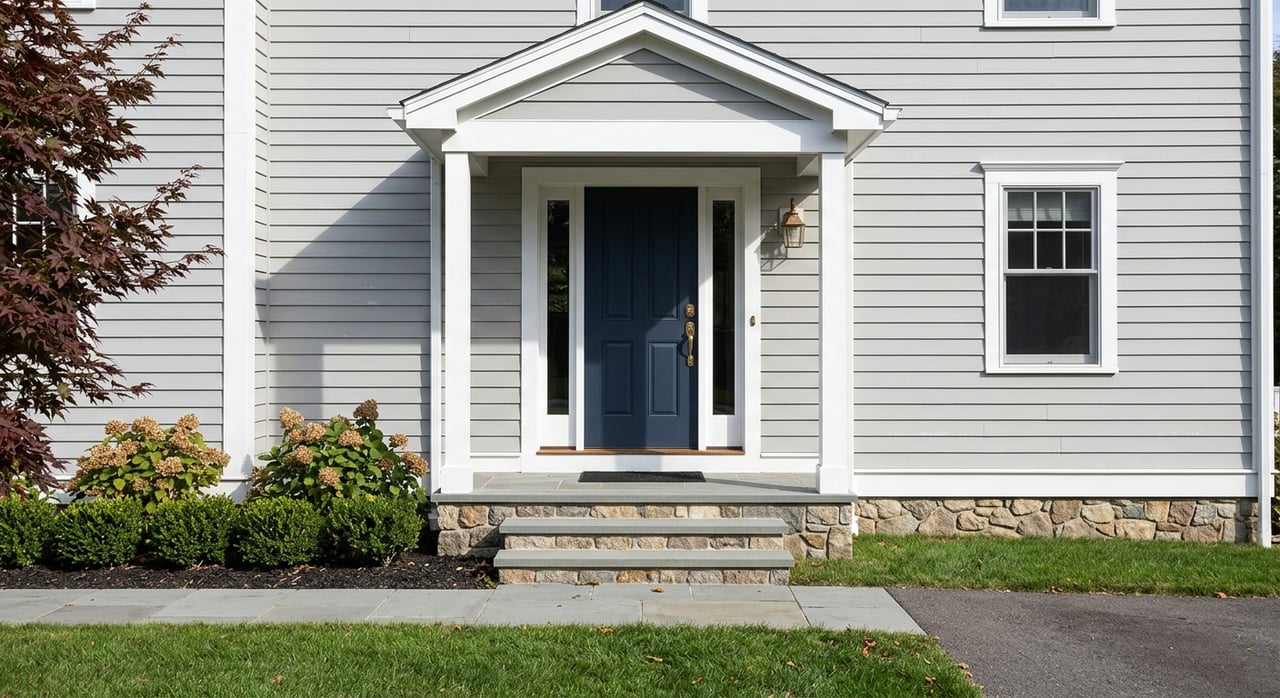
How Stamford Agents Set A Strategic Listing Price
April 23, 2026
April 23, 2026
Pricing your home in Stamford is not about picking a big number and hoping the market agrees. It is about reading the local data, understanding how buyers shop, and matching your home’s value to the right launch strategy. If you are thinking about selling, knowing how agents set a strategic listing price can help you protect your time, your leverage, and your net proceeds. Let’s dive in.
Stamford remains a market where pricing discipline matters. In March 2026, Redfin’s Stamford housing market data showed a median sale price of $640,000, about 3 offers on average, and 42 days on market. At the same time, Zillow’s Stamford home value data noted homes going pending in around 14 days, while Realtor.com reported a 100% sale-to-list ratio and 24 median days on market in February 2026.
Those figures are not identical because each source tracks the market differently. Still, they point to the same conclusion: well-priced homes can move, while overpriced homes are more likely to sit. In a market like Stamford, the first price you choose can shape the entire sale.
A strategic list price usually begins with a comparative market analysis, or CMA. According to the National Association of REALTORS® pricing guide, agents look at your home’s size, location, amenities, condition, and the current market when recommending a price.
They also study recent sold homes, properties under contract, and active competition in the same market area. That matters because your home is not priced against a city average alone. It is priced against what buyers can choose right now, what they just paid nearby, and how quickly you want to move.
Strategic pricing is not one-size-fits-all. NAR notes that a seller’s timeline and goals should influence the recommendation, which means the right price can vary depending on whether you want to sell quickly, maximize exposure in the first weeks, or hold firmer for a specific outcome.
That is why a thoughtful agent does more than estimate value. They help you weigh the tradeoffs between speed, leverage, and likely net proceeds.
Condition can shift pricing more than many sellers expect. NAR also points out that renovations, needed repairs, upgrades, and possible concessions all affect where a home should be priced.
In practice, your agent may ask whether your home needs paint, flooring updates, system work, or kitchen and bath improvements before launch. Sometimes the smart move is adjusting the list price. Other times, it is preparing the home more carefully so the price can stay stronger.
One of the biggest mistakes a seller can make is treating Stamford like a single, uniform market. It is not. Redfin’s neighborhood-level data showed major differences in March 2026, including about $1.20M in North Stamford, $699.5K in Springdale, $651K in Newfield-Westover-Turn of River, $617K in Cove-East Side-Shippan, and $516K in Shippan.
Those price differences are significant, and so are the sale-to-list ratios. Some neighborhoods were seeing homes close above asking at stronger rates than others. That is a clear sign that strategic pricing in Stamford happens at the micro-market level, not by broad citywide guesswork.
Realtor.com reported a similar spread in Stamford listing prices in February 2026. Its market overview showed neighborhoods around $525K in Springdale-Glenbrook-Belltown, $562.5K in Cove-East Side-Shippan, $728K in Newfield-Westover-Turn of River, and $1.56M in North Stamford.
For you as a seller, that means your home should be measured against the most relevant local competition. A buyer comparing homes in North Stamford may be thinking very differently than a buyer focused on Springdale or Shippan.
Location means more than a street address. Stamford’s Transportation Center is the second busiest station in the Metro-North system after Grand Central Terminal, with more than 8.5 million riders per year and service to Grand Central and New Haven.
That kind of access supports demand for homes with convenient rail connections and strong links to downtown. If your property offers an easier commute or access to daily amenities, your agent may factor that into pricing.
The city also reports more than 56 parks and a goal of helping residents live within a 10-minute walk of a quality park. Access to parks, waterfront areas, and everyday recreation can influence how buyers perceive convenience and lifestyle value.
These features do not create a price on their own. But they can help explain why two homes with similar square footage may not command the same response.
Stamford Public Schools serves PK-12 across 21 schools, with 24 facilities, 7 magnet programs, 3 IB programs, and an 85.4% four-year graduation rate, according to the NCES district profile. For many buyers, access to district programs is one part of the overall decision-making process.
An agent should reference this carefully and factually. The key is not making subjective claims, but understanding that buyers often weigh commute, parks, and school-related logistics together when judging value.
Your list price is only part of the financial picture. Stamford property taxes are based on assessment multiplied by the mill rate, the city has four geographic taxing districts, and mill rates are set each May by the Board of Finance, according to the city’s property assessment information.
Why does that matter? Because buyers often shop based on monthly carrying cost, not price alone. If taxes are higher relative to nearby alternatives, your agent may need to consider that when positioning the home.
Zoning can also matter, especially for homes with larger lots, expansion possibilities, or redevelopment appeal. Stamford’s zoning regulations govern use, building size, setbacks, parking, open space, and other factors that can affect a property’s potential.
For some homes, zoning flexibility or lot characteristics can support a stronger price. For others, limitations may narrow the buyer pool. A strategic agent looks at both before recommending a number.
One reason strategic pricing matters so much is that buyers often search in preset price ranges. NAR notes that if a home is priced just above a common search cap, it may miss a large group of qualified buyers who never see it.
That means pricing is not just about market value. It is also about visibility. A home listed slightly inside the right search band may attract more eyes than one listed just beyond it.
Overpricing often sounds safe because it feels like leaving room to negotiate. In reality, it can reduce showings, slow momentum, and lead to later price cuts. Zillow’s research on overpricing and time on market found that overpricing is associated with longer market times, while NAR notes that expired listings often need a price reset because the original ask was too high.
In Stamford, that can create a stale-listing problem. Once a home sits too long, buyers may assume something is wrong, even when the issue is simply the price.
The strongest pricing plans are usually tied to the launch itself. NAR’s guidance supports a process that considers comps, condition, market conditions, seller timing, and concessions together.
That means your agent should not choose a number in isolation. They should ask how the home will show, what improvements may help, and how the property will compete once it hits the market.
For many Stamford sellers, price strategy and presentation strategy should work side by side. A carefully prepared home, supported by strong photography, polished marketing, and broad exposure, gives the list price a better chance to perform.
That is especially important in nuanced submarkets where buyers compare homes quickly and often online first. If the goal is strong early interest, pricing and presentation need to be aligned from day one.
A strategic Stamford agent should be able to explain pricing clearly and specifically. That usually includes:
This is where local experience matters. Stamford is not a market where a generic pricing formula works in every neighborhood or price point.
A strategic listing price is not about chasing the highest possible number on paper. It is about finding the best position for your home in the real market, with your goals, timing, and likely net proceeds in mind. In Stamford, where neighborhood differences, buyer search behavior, taxes, condition, and commuter access all play a role, thoughtful pricing can make a meaningful difference.
If you are preparing to sell and want a pricing strategy built around your home’s specific submarket, goals, and presentation plan, Catherine Richardson can help you evaluate the right next step with local insight and a tailored approach.
Stay up to date on the latest real estate trends.




Known for her market expertise, strategic negotiation skills, and unwavering professionalism, Catherine’s true distinction lies in her ability to listen. She takes the time to understand exactly what you want.